 EN
EN



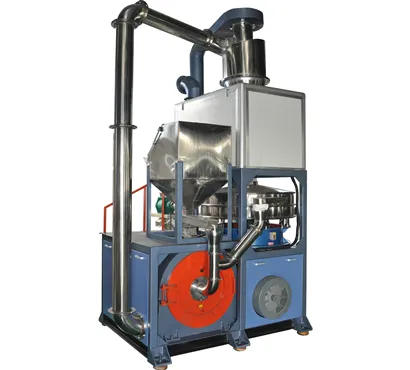
All plastics processing operations have some scrap. There are always rejects, sprues, runners, and edge trim. This material must be sent to an "off-site" for toll grinding, which requires additional expenses, time and loss of quality control. An in-house regrind program solves this problem. A dependable plastic grinder is the backbone of such a course. You create immediate value from waste, when you grind your own scrap. Zhangjiagang Huibang Machinery Co., Ltd. has been assisting customers in various sectors to create efficient regrind systems in-house, ranging from rotomolding to masterbatch production and waste plastic recycling. This article will describe how a plastic grinder allows this to be possible.
Why Take Regrind In House
It is easy to make the business case for in-house regrind. First, material savings. The cost of virgin resin is high and the regrind comes at the cost of only energy and labour. Second, speed. External grinding involves boxing up scrap, shipping it away, waiting for processing, and having it shipped back. With an in-house plastic grinder, you can add regrind to your hopper in minutes, minimizing downtime. Third, quality control. You control your grinding parameters, including particle size, dust percentage, and contamination leves. You know what is coming back to your parts! Fourth, sustainability. Customers and regulators are growing more concerned with reducing waste to landfill and reducing carbon footprint. All these benefits are enabled with a plastic grinder.
Choosing the Right Plastic Grinder for Regrind
Not all plastic grinders are suitable for on-site regrinding. You must have a machine that is appropriate for the material, scrap shape and rate you're processing. A low-profile, hopper on a grinder nearby the press is good for small sprues and runners from injection molding. If the parts or the purgings are larger or more numerous, a central granulator or a shredder/grinder tandem may be required. If the material is soft, such as LDPE or LLDPE, choose a plastic grinder that has aggressive cutting geometry with efficient cooling so that it won't melt. If the material is rigid, such as PVC or PS, a simple grinder with sharp blades will work. Huibang has all the plastic grinders, crushers and shredders to choose from, so you'll be able to find the perfect one for your regrind purposes.
Integrating the Grinder Into Your Workflow
An in-house regrind program is successful when grinding is part of production. Minimize material handling by using plastic grinder as close to the molding or extrusion line as possible. Label bins for different resin types/colors to avoid contamination. Set a clear guideline of what can be reground. Contaminated or degraded materials may be more suitable for disposal. Provide training to trainers so that the machine is not overloaded when feeding scrap. Transport regrind using a conveyor or blower system, directly to a storage silo or blending station. Huibang machines are easy to integrate, and available in blow-through, manual collection or auger takeaway variants.
Maintaining Regrind Quality
The purpose of an in-house regrind program is not only to minimize scrap volume, but to create regrind that comparable to virgin material. Consistency is everything. A good plastic grinder will yield a consistent particle size, with few fines and dust. But, regrind ratio requires to be managed as well. Most processes successfully use 10 to 30% regrind virgin resin. Excessive regrind can impact melt flow, colour or mechanical properties. Remember heat history as well. Every time the plastic is fed into a grinder and then processed, it deteriorates somewhat. If it is a high quality application, reduce the number of regrind cycles. Huibang's high precision equipment and scientific management system are designed to ensure a stable regrind quality for thousands of operating hours.
Safety and Housekeeping for Regrind Operations
Operating a plastic grinder in-house adds responsibility. Set guidelines for safety practices with your employees. Do not put fingers or hands into the hopper when the machine is operating. Never clean or change blades while power is on. Always lock out power before servicing. Correctly use push sticks or reverse functions to remove jams. Maintain a clean area around the grinder. Spilled regrind poses a slip hazard and dust buildup around motors is a fire hazard. If you are grinding materials that produce fines, install dust collection ports. Huibang machines have safety features, but the best protection is through proper training and housekeeping.
Conclusion
An in-house regrind program with a reliable plastic grinder saves money, speeds up production and provides you control of your material stream. Zhangjiagang Huibang Machinery Co., Ltd. supplies equipment and know-how to ensure it works. With 19 years of experience, strong technical force, and perfect after-sales service, Huibang has become a leading manufacturer of size reduction equipment. We supply our plastic grinders, pulverizers, and shredders to over 1,500 customers throughout the waste plastic, rotational moulding, masterbatch, rubber, wood recycling, and food industries. Please visit our factory and experience our machines. Call us today to begin creating your own regrind program.